

Boost Restaurant Bookings in Gurgaon with Google Ads + Local SEO (2026)
Gurgaon restaurants compete in a saturated market with thin margins. Google Ads for reservations + Map Pack local SEO is the combination that drives booked covers — when set up with sector-specific landing pages, dayparting, and review-velocity programs.

On this page · 4 sections
TL;DR
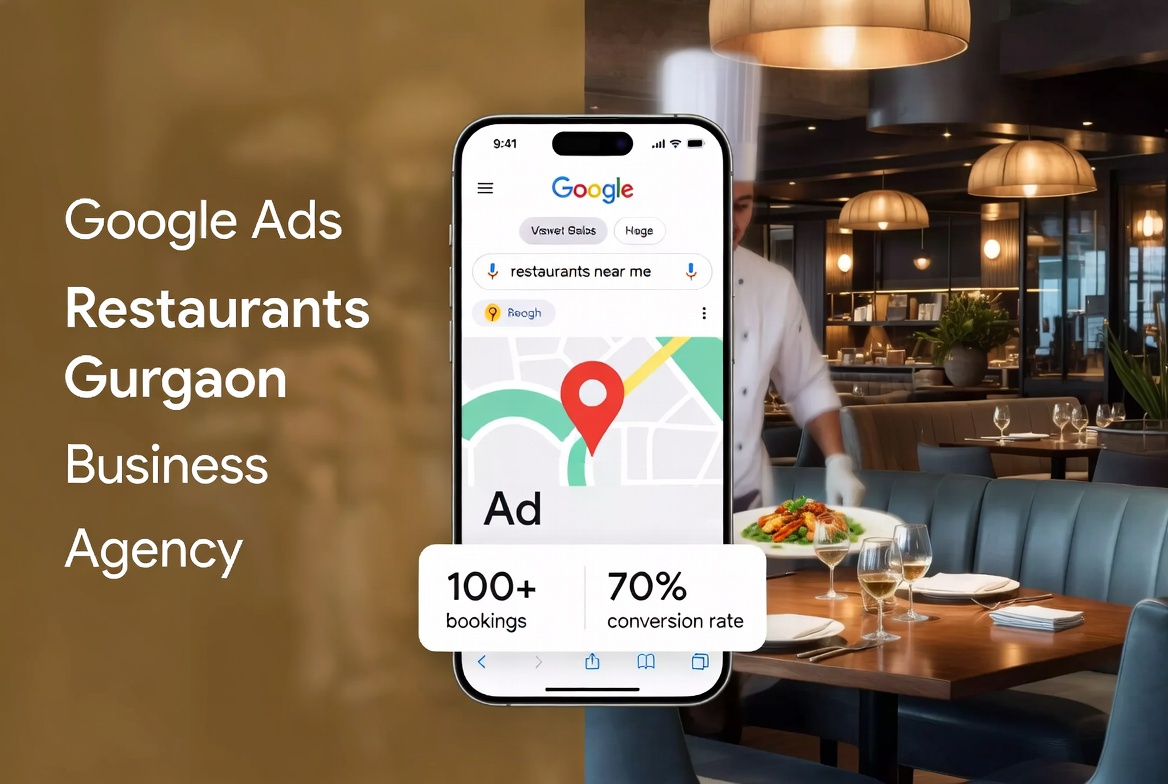
Restaurant marketing in Gurgaon is dominated by Zomato, Swiftly, and Instagram — but the highest-margin bookings (party of 4+, weekend reservations, premium dining) increasingly come through Google. The setup that works in 2026: Google Ads on reservation-intent queries with dayparting (peak before-meal hours), Map Pack dominance for sector queries via GBP + review velocity, and direct-booking buttons that bypass aggregator commissions.
- Google Ads dayparting — bid up 4–6pm for dinner reservations, 11am–1pm for lunch
- Sector-specific landing pages — "Italian restaurant Sector 29 Gurgaon" type queries
- GBP + review velocity — 10–25 new reviews/month sustained
- Direct booking buttons — bypass Zomato/EazyDiner commissions when possible
- Avoid: generic Facebook reach ads (low intent), excessive Zomato dependency (margin killer)
Boosting restaurant bookings in Gurgaon via Google Ads + local SEO is the dual-channel strategy independent restaurants and small chains use to capture high-intent dining searches (reservations, sector-specific cuisine searches, occasion-based queries like "best place for anniversary dinner in Gurgaon") without paying the 18–25% commission Zomato or EazyDiner takes per booking. The Map Pack + Google Ads combination is structurally aligned with restaurant economics: bookings happen near meal time, intent is high, geographic relevance is narrow, and a single dinner reservation contributes ₹3,000–₹15,000 to revenue at much higher margin than equivalent aggregator-sourced traffic.
This guide covers the Google Ads setup that drives reservations efficiently, the local SEO program that compounds organic visibility, and the pitfalls (over-dependence on Zomato, generic Facebook reach ads, ignoring review velocity) that most Gurgaon restaurants fall into.
Google Ads setup for reservations
Campaign structure
One campaign per primary intent cluster:
- Branded + competitor — bid on your restaurant name (cheap, captures direct intent) + competitor names (more expensive, captures consideration)
- Cuisine + sector — "Italian restaurant Sector 29 Gurgaon," "North Indian restaurant DLF Phase 4"
- Occasion-based — "best anniversary dinner Gurgaon," "birthday celebration restaurant Cyber Hub"
- Reservation-intent — "book table Gurgaon," "fine dining reservation NCR"
Dayparting + bid adjustments
Bid up 4–6pm IST (dinner search peak), bid up 11am–1pm (lunch search peak), bid down 12am–9am. Mobile bid +20–30% (most reservation searches are mobile). Geographic bidding: prioritize NCR sectors + adjacent Delhi areas.
Landing pages
Each campaign cluster needs its own landing page. Generic "homepage with menu" landing pages convert at 1–3%; sector + cuisine + occasion-specific pages convert at 8–15%. Each landing page includes: cuisine description, signature dishes with photos, sector address + map, direct booking CTA (phone, WhatsApp, or table-reservation form), reviews, and parking/access info.
Local SEO program for Map Pack dominance
GBP optimization
Complete profile with: accurate primary category ("<cuisine> restaurant"), full secondary categories (catering, bar, delivery if applicable), accurate hours (with holiday hours), 40+ photos (food, ambience, exterior, interior), weekly GBP posts (new dishes, offers, events), Q&A active management, menu items added directly to GBP. See our GBP optimization guide.
Review velocity
10–25 new reviews/month sustained is the target for an active restaurant. Workflow: train wait staff on the natural ask moment (post-meal, after positive interaction), QR code on the bill with direct Google review link, follow-up SMS to reservations the next day. Reply rate 100% on all reviews. See our Google reviews ranking guide.
Sector-specific website pages
For multi-location chains: one landing page per sector. For single-location restaurants: a sector-specific page targeting the primary catchment area (e.g., "Italian restaurant Sector 29 Gurgaon") even if it's the only location.
Direct booking vs Zomato/EazyDiner dependency
The economic case for driving direct bookings: Zomato Pro/EazyDiner commissions run 18–25% per cover; aggregator-sourced traffic produces lower repeat-visit rates (the diner remembers Zomato, not the restaurant); aggregator brand pages don't compound into the restaurant's own SEO asset. The senior-tier restaurant playbook: maintain a presence on aggregators (table-discovery is real) but invest heavily in direct-booking channels (Google Ads + GBP + own website) to grow the direct share over 12–18 months.
What doesn't work for restaurant marketing in 2026
- Generic Facebook reach ads — cheap impressions, no booking intent, weak ROAS
- Influencer collabs without measurement — vanity reach; if you can't attribute reservations, it's marketing theater
- Heavy Zomato Pro discount dependency — trains diners to wait for discounts; compresses margins permanently
- Print + outdoor advertising — almost completely measurable-attribution-dead for independent restaurants in 2026
- Buying generic 'foodie database' leads — nearly always spam-tier; reply rates <1%
For Gurgaon-specific restaurant Google Ads management, see our paid marketing services page. For local SEO programs, see local SEO services.
01 What's the realistic monthly Google Ads budget for a Gurgaon restaurant?
02 Should restaurants run Instagram and Facebook ads or focus on Google?
03 How important is the restaurant's own website if Zomato + GBP exist?
04 How do I get more Google reviews for my restaurant?
05 Are restaurant directory sites (Zomato, EazyDiner, Dineout) still worth maintaining?
06 What's the impact of high Google review velocity on Map Pack ranking?
07 Does MaxGrowth work with restaurants in Gurgaon?
Deepika Bhardwaj is the Founder of Max Growth Agency, where she helps businesses scale through strategic SEO, high-impact Content Marketing, and authoritative Digital PR. With years of hands-on experience in building organic visibility and brand trust, Deepika specializes in data-driven growth strategies that consistently deliver results.
Related posts
SEO vs Google Ads for Gurgaon Startups (2026): The Honest Allocation Framework
10 Google Business Profile Mistakes Gurgaon Businesses Make in 2026 (And How to Fix Them)
E-commerce SEO Strategy for Gurgaon D2C Brands (2026): Category Pages, Product Schema, and AEO
SEO for IT Companies in Gurgaon (2026): Ranking Globally from NCR for B2B Tech Services
Get a free AI search audit.
We run your domain against ChatGPT, Gemini, Perplexity, and Google AI Overviews for 10 high-intent queries in your category. Short PDF, 48 hours, no sales call.
Email [email protected]