

How to Build Local Backlinks in 2026: 8 Tactics That Actually Work
Local backlinks remain a meaningful Map Pack ranking signal in 2026 — but the tactics have shifted. The 8 ethical local link-building tactics that actually compound + the 5 that have stopped working or carry penalty risk.

On this page · 2 sections
TL;DR
Local backlinks still move the needle for Map Pack ranking — but the tactics have evolved. The 8 that work in 2026: local sponsorships, local media + PR, partnership backlinks, community participation, scholarships (with caveats), local guides, business associations, and resource-page outreach. The 5 that have stopped working or carry penalty risk: PBNs, paid blog links, comment spam, guest posts on irrelevant sites, and reciprocal link schemes.
- Local sponsorships — events, charities, community programs
- Local media + PR — interviews, expert quotes, op-eds
- Partnership backlinks — vendor relationships, customer partnerships
- Community participation — local forums, business networks
- Resource pages — local "best of" lists in your category
- Avoid: PBNs, paid blog links, generic guest posts, reciprocal schemes
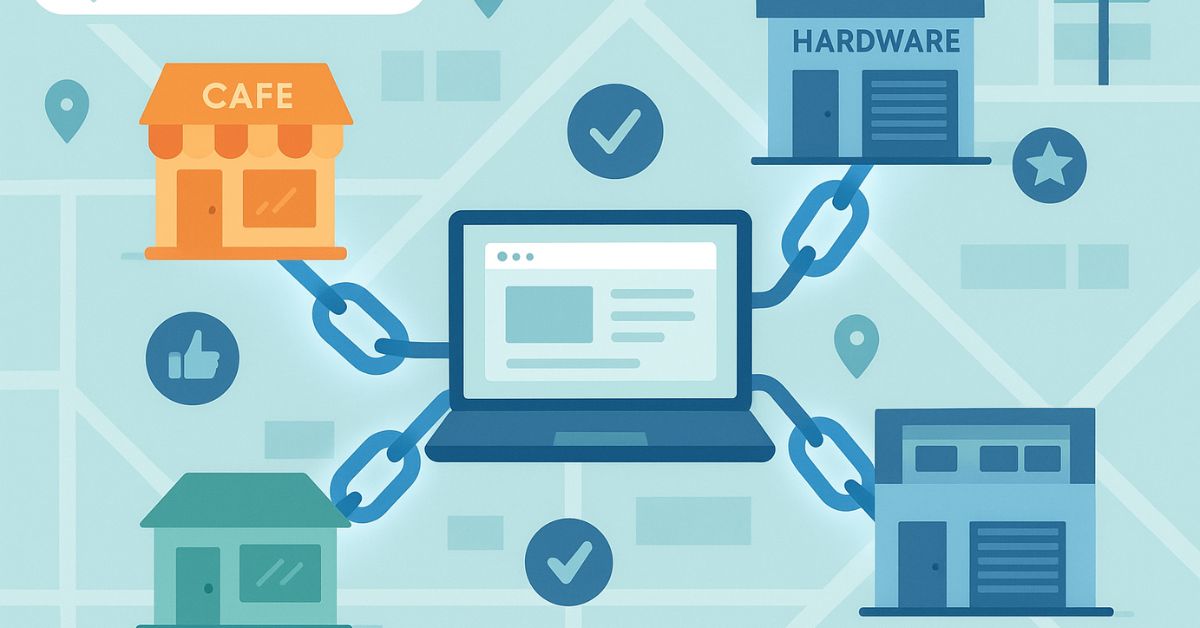
Local backlinks — links from websites in or about your local area — remain a meaningful Map Pack ranking factor in 2026 because they reinforce Google's understanding that your business is locally relevant. But the tactics that worked in 2018–2022 (cheap directory submissions, scholarship spam, mass guest posting) have lost effectiveness or now carry penalty risk. This guide is the playbook of 8 link-building tactics that compound + 5 to avoid.
The 8 tactics that work in 2026
1. Local sponsorships
Sponsor a local event, charity 5K, sports team, school program, community fair. Sponsor pages on the organizing entity's site typically link to sponsors. Cost: ₹5K–₹50K per sponsorship + community goodwill + a contextual local link.
2. Local media + PR
Pitch local newspaper journalists, regional bloggers, hyperlocal news sites with expert commentary on category trends. Times of India Gurgaon, Hindustan Times city, NDTV Gurgaon, regional health/lifestyle publications. Specific angle + named expert + data drives placement.
3. Partnership backlinks
Reach out to your vendor partners, customer partners, and suppliers asking for a partner/customer recognition page link. Most B2B partnerships happily offer mutual recognition.
4. Community participation
Active participation in local business associations (FICCI Gurgaon chapter, CII regional council, NASSCOM Gurgaon), Chamber of Commerce, local meetup groups. Member directory listings + speaker pages + association blogs all link.
5. Scholarships (with caveats)
Genuine scholarships at local colleges/universities can earn .edu links. Caveats: the scholarship must be genuine (real award given, real selection process), not a thinly-disguised link-buying scheme. Google has been penalizing scholarship-link-farms; legitimate scholarships still earn legitimate links.
6. Local "best of" guides and resource pages
Reach out to local bloggers + journalists + niche publications running "best dentists in Gurgaon," "best plumbers in DLF Phase 4," "best restaurants in Cyber Hub" type pages. Pitch your inclusion with proof points (reviews, awards, unique offering).
7. Business association directories
FICCI, CII, NASSCOM, local Chamber of Commerce, industry-specific associations (IDA for dentists, BAI for builders, etc.). Membership requires real engagement but the directory links carry weight.
8. Resource-page outreach
Find pages that link to your competitors or to "useful resources in <area>" type lists. Pitch your inclusion with a clear value proposition (you offer something the linked resources don't, or you offer a comparable alternative worth mentioning).
The 5 tactics that have stopped working / carry penalty risk
- Private Blog Networks (PBNs) — detection has improved; manual + algorithmic penalties common
- Paid blog links — "guest post on real site for ₹X" is link-buying disguise; against Google guidelines
- Comment spam — near-universally nofollowed + low quality
- Generic guest posts on irrelevant sites — quality of inbound link low; risks association with link networks
- Reciprocal link schemes — "you link to me, I link to you" at scale = link scheme per Google
For local SEO link-building engagement, see our white-label link building page or local SEO services pillar.
01 How many local backlinks does a small business need?
02 Are guest posts still a valid link-building tactic in 2026?
03 How fast can I build 20 local backlinks?
04 Should I disavow old low-quality backlinks?
05 What's the ROI math on local link building?
06 Does MaxGrowth do local link building?
Deepika Bhardwaj is the Founder of Max Growth Agency, where she helps businesses scale through strategic SEO, high-impact Content Marketing, and authoritative Digital PR. With years of hands-on experience in building organic visibility and brand trust, Deepika specializes in data-driven growth strategies that consistently deliver results.
Related posts

Local SEO Checklist for Gurgaon Businesses (2026): The 30-Step Playbook
Local SEO for Real Estate Contractors in 2026: Renovation, Construction, and Trade Specialists
Content Marketing for Local Businesses in 2026: A Compounding Playbook for Service Businesses

Are Google Reviews a Local SEO Ranking Factor in 2026? (Yes — Here's What the Data Shows)
Get a free AI search audit.
We run your domain against ChatGPT, Gemini, Perplexity, and Google AI Overviews for 10 high-intent queries in your category. Short PDF, 48 hours, no sales call.
Email [email protected]